JST-ASPIRE Workshop in Gamagori

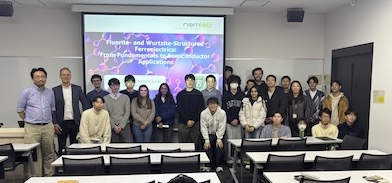
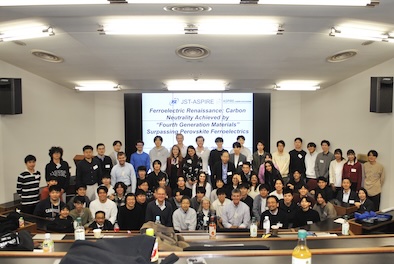
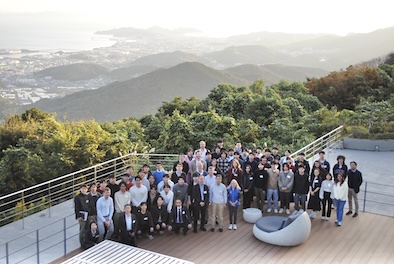
A JST-ASPIRE workshop was held in Gamagori on Nov. 6–8. More than 70 participants from Japan (Institute of Science Tokyo, Kobe University, Osaka University, Osaka Metropolitan University, and Nagoya University), the United States (Pennsylvania State University, University of Pennsylvania, and Carnegie Mellon University), and Germany (NaMLab and Kiel University) gathered to discuss the development of novel ferroelectric thin films.
Seminar: Dr. Uwe Schroeder, Dr. Roberto Guido

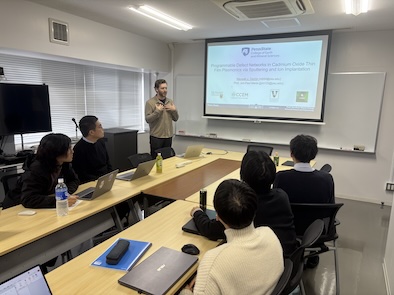
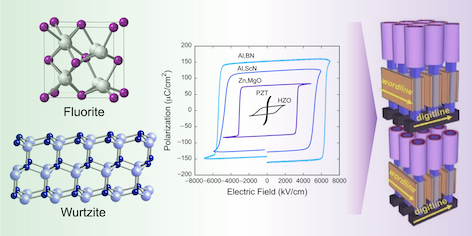
On Nov. 5, Dr. Uwe Schroeder and Dr. Roberto Guido (NaMLab, Germany) visited us and lectured on fluorite- and wurtzite-structured ferroelectrics.

Lecturer: Dr. Uwe Schroeder and Dr. Roberto Guido (NaMLab, Germany)
Fluorite- and Wurtzite-Structured Ferroelectrics: From Fundamentals to Semiconductor Applications

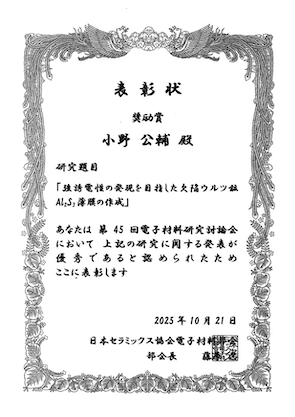
Awarded: Kosuke ONO

Kosuke ONO won the presentation award of The 45th Electronics Division Meeting of the Ceramic Society of Japan held in Keio University, Japan for his presentation on fabrication of defective-wurtzite Al2S3 thin films.

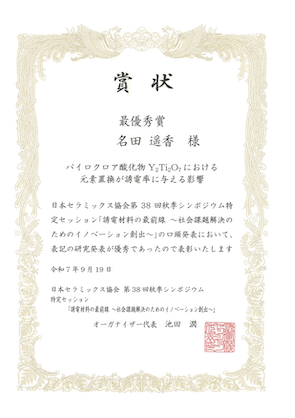
Awarded: Haruka NADA

Haruka NADA won the grand prize of the dielectric materials session in The 38th Fall Meeting of the Ceramic Society of Japan held in Gunma University, Japan for her presentation on doped Y2Ti2O7 dielectric thin films.

Jpn. J. Appl. Phys.

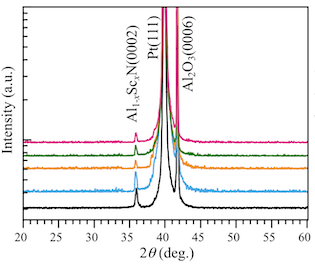
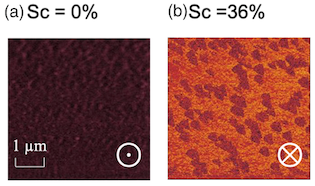
Our paper entitled “Effect of Sc Content on the Polarity of AlScN Thin Films Deposited on Indium Tin Oxide by Radio Frequency-magnetron Sputtering” has been published in Jpn. J. Appl. Phys. We found that the polarity is affected by both the degree of epitaxy and the amount of Sc content.

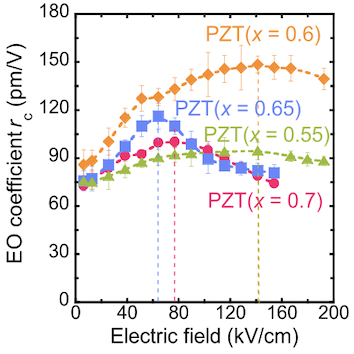
Published: Composition Dependence of EO Effect in Rhombohedral PZT Films

Our paper entitled “Composition Dependence of Electro-optic Effect in (111)/(11-1)-oriented Epitaxial Rhombohedral Pb(ZrxTi1−x)O3 Thin Films Prepared by Chemical Solution Deposition” has been published in Jpn. J. Appl. Phys. We found that the effective EO coefficient was not constant with respect to the applied field but varied with the magnitude of AC field due to dynamic domain motion, reaching its maximum value at a certain electric field.

2026 Energy Func. Mater. Eng. Lab., Nagoya Univ. [Internal link]